Fractional CAIO
I provide AI strategy, AI governance, and AI architectural expertise, bridging the gap for companies looking to expand traditional technology stacks into AI products and services.
What's a Chief AI Officer
A CAIO is the cross-functional senior-most AI leader in the organization that works alongside and within the technology department.
- Leads the charge across the organization to solidify high-impact business challenges suitable for AI-driven solutions.
- Positions the organization for AI data readiness, quality, and AI leverage opportunities across systems.
- Evaluates the feasibility and ROI of applying AI models to existing workflows.
- Map model capabilities to business objectives and compliance requirements.
- Prototypes and benchmarks multiple AI approaches to determine the best fit.
- Defines success metrics, governance needs, and integration pathways for scale.
How a Chief AI Officer Impacts the Business
The role firmly establishes a transformation of the organization into the new generation of "AI-first".
- Strategic Advisor – Shapes AI vision, policies, and direction alongside executives.
- Modernization Lens – Envisions and communicates the systems and processes of the organization through an AI-first perspective.
- Transformation Partner – Leading cross-functional teams through design, deployment, and adoption of AI systems.
Expert level AI formulation & execution

AI Strategy & Roadmap
We will identify, prioritize, and execute high-impact AI opportunities and which models fit as a foundational roadmap.

AI Architecture Design
Your model requirements will dictate the AI architecture, data pipelines, APIs, and model infrastructure.

AI Platform / Cloud Services
We will work together to outline, map, formulate, and execute the launch of the right AI platform for your business.

AI Data Engineering
I've defined and prepared large and reliable data pipelines and model-ready datasets for enterprise clients.

LLM Deployment & Integration
I've integrated ML/LLM models into products and workflows for real-world production systems.

Automated AI Model Fine Tuning
I have architected, built, and deployed automated AI model fine-tuning batch subsystems.
What can a fractional CAIO provide?
High-Caliber Communication
- Clear, responsive, and transparent across every channel
- Executive-ready docs and updates — no noise, no fluff
- Weekly summaries and monthly executive briefings
- Highly responsive throughout the engagement
Board-Room-Quality Output
- C-level slide decks, AI roadmaps, investor materials, model evaluations, rollout plans, and everything in between
- Visual assets that clarify complexity for any audience
- Deliverables that withstand investor and due-diligence scrutiny
Strategic, Expert-Level Input
- AI strategy, model selection, data, architecture, and product
- Translating business goals into pragmatic AI direction
- Objective counsel on vendors, build-vs-buy, and model risk
- Constantly refining process, automation, and reporting
Continuous Improvement
- Bringing new AI-driven tools and efficiencies into your workflow
- Committed to long-term impact, not short-term optics
Operational Leadership
- Hands-on involvement — data pipelines, model integration, architecture, infrastructure
- Oversight of AI delivery, evaluation, governance, and quality
- Focus on accuracy, reliability, and measurable outcomes
Partnership & Integrity
- Aligned with your business goals, not vendor interests
- Transparent about trade-offs, risks, and ROI
- Treating your company as if it were my own
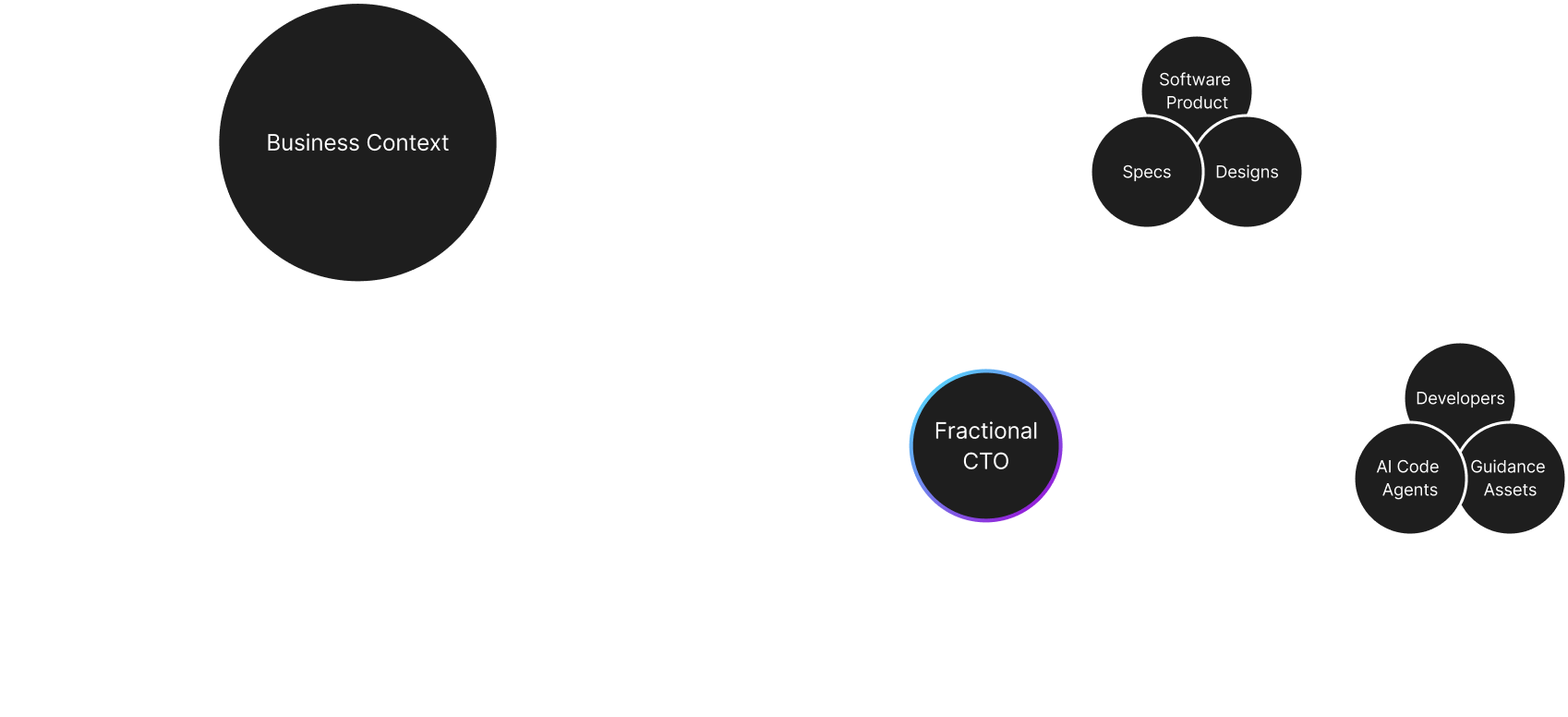
The AI code-agent development lifecycle
How engineering teams ship with AI agents responsibly — guidance assets, oversight, and quality rails that turn agentic velocity into durable engineering output.
Strategy & Specs
Business goals translate into product specs and designs — the source of truth every agent works against.
Guidance Assets
CLAUDE.md, agent rules, architecture standards, and prompt libraries that keep agents aligned and auditable.
Developers + Agents
Engineers pair with AI code agents against the guidance — agents do the volume, humans hold the judgment.
Oversight & Review
Architecture review, security scrutiny, and code-quality gates keep agent output enterprise-ready.
Integration & Deployment
CI/CD with automated quality checks, monitoring, and the safety rails that make AI-assisted shipping responsible.
Iterate & Improve
Feedback loops refine the guidance assets themselves — the system gets better as the team uses it.
Creating the matrix of every possible AI opportunity.
One of the key deliverables in the discovery phase of the process is the AI opportunity matrix, which provides a detailed list of each key AI insertion opportunity that exists and its ultimate impact on the financial and operational bottom line.
- Area, focus, and impact
- Financial implications
- Integrations and technical ramifications
- Ownership, accountability, and expectations
"Building a complete CI/CD DevOps pipeline with Shawn is a transformative experience. He designs it to scale, and the impact on a development team is immediate and profound."


Automated self-training AI model for content platform
Learn more on a recent engagement, where I architected, built, and deployed an automated AI model training and tuning system for an AI-based content creation platform.
Hands-on AI expertise across data, models, and adoption.
I specialize in helping organizations establish AI capabilities that drive measurable business value.
- Model Discovery, Evaluation, and Deployment
- Predictive Analytics & Forecasting
- Intelligent Automation (RPA + ML)
- NLP & Document Intelligence
- LLM Training & Fine Tuning
- AI Governance & Risk Management
"Shawn helps clients translate AI potential into practical strategy. He's one of the few people who can make models and algorithms feel like natural business tools."
"Shawn helps clients navigate AI adoption with a clarity that builds real confidence. He meets people where they are and guides them toward the next right step."
I would recommend Shawn Livermore as a strategic option for custom software and enterprise architectural analysis work.


Client success stories
Proven impact across enterprise modernization, M&A, and technology leadership. From $100M savings to $20M+ transformations—see the outcomes.
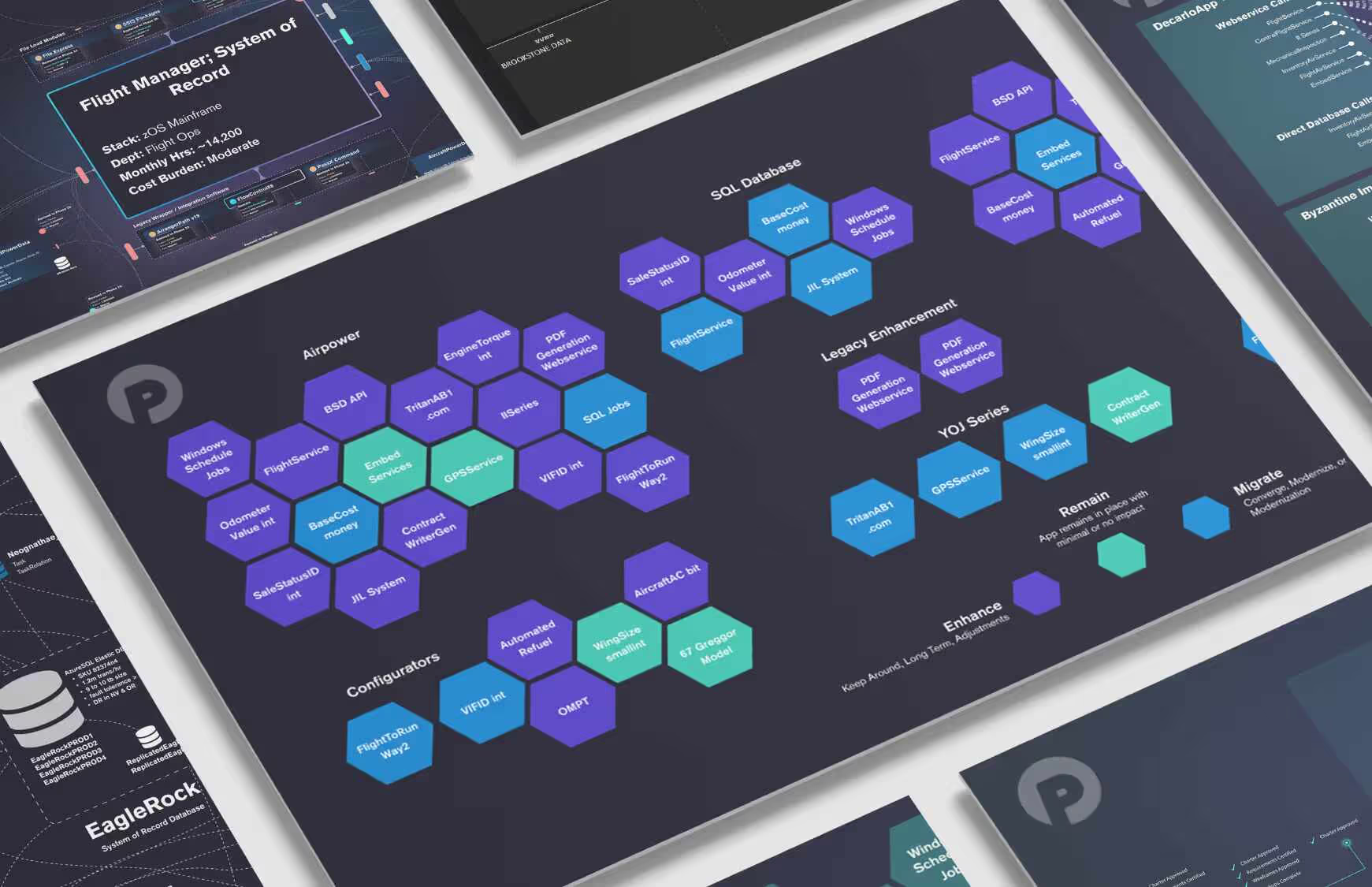
Enterprise modernization at scale
Led 30+ developers to rebuild flagship products for 2nd largest US property tax processor ($18B annually).
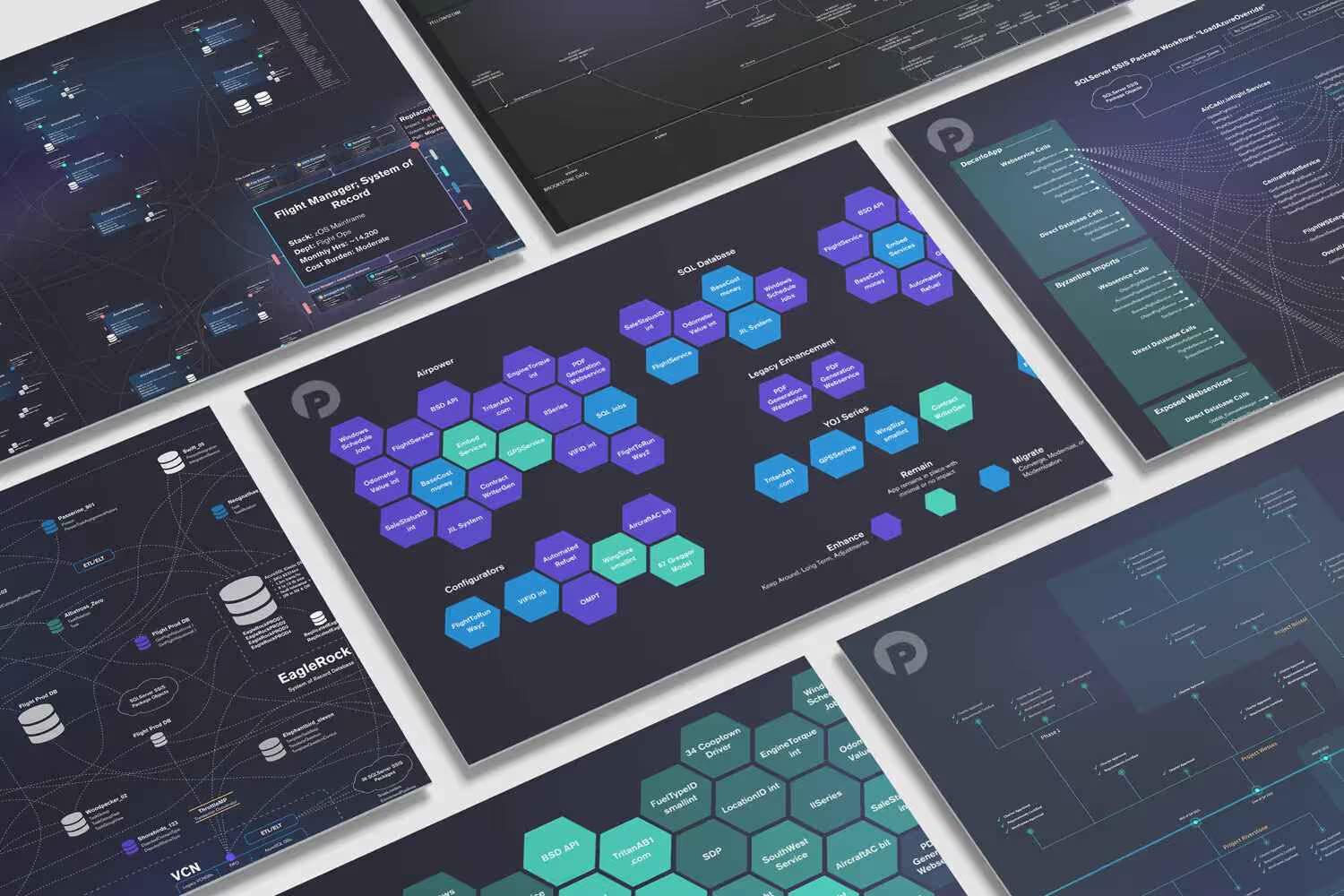
Holistic Software Architecture
Architected and led development teams for a legal automation software company, aquired for $50M.
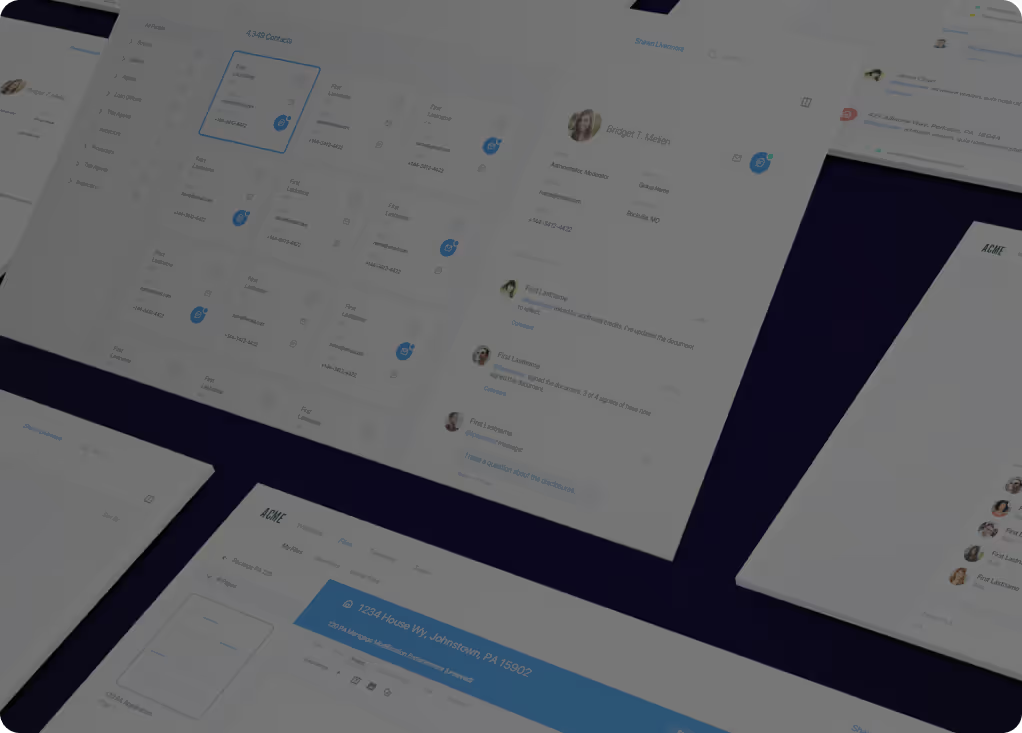
Software Product Design for Title Ins Web App
Reimagined and redesigned multiple windows desktop apps into a new design of a single, unified, modern web app.
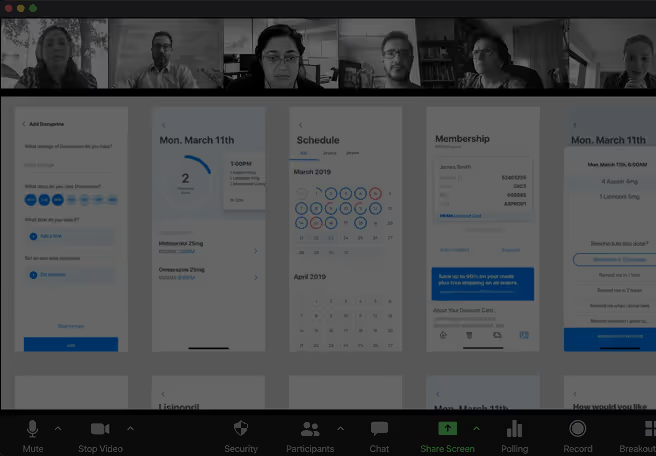
iOS Web App Design and Webservices
Front-end iOS design and back-end webservices architecture and development to support the new iOS app.
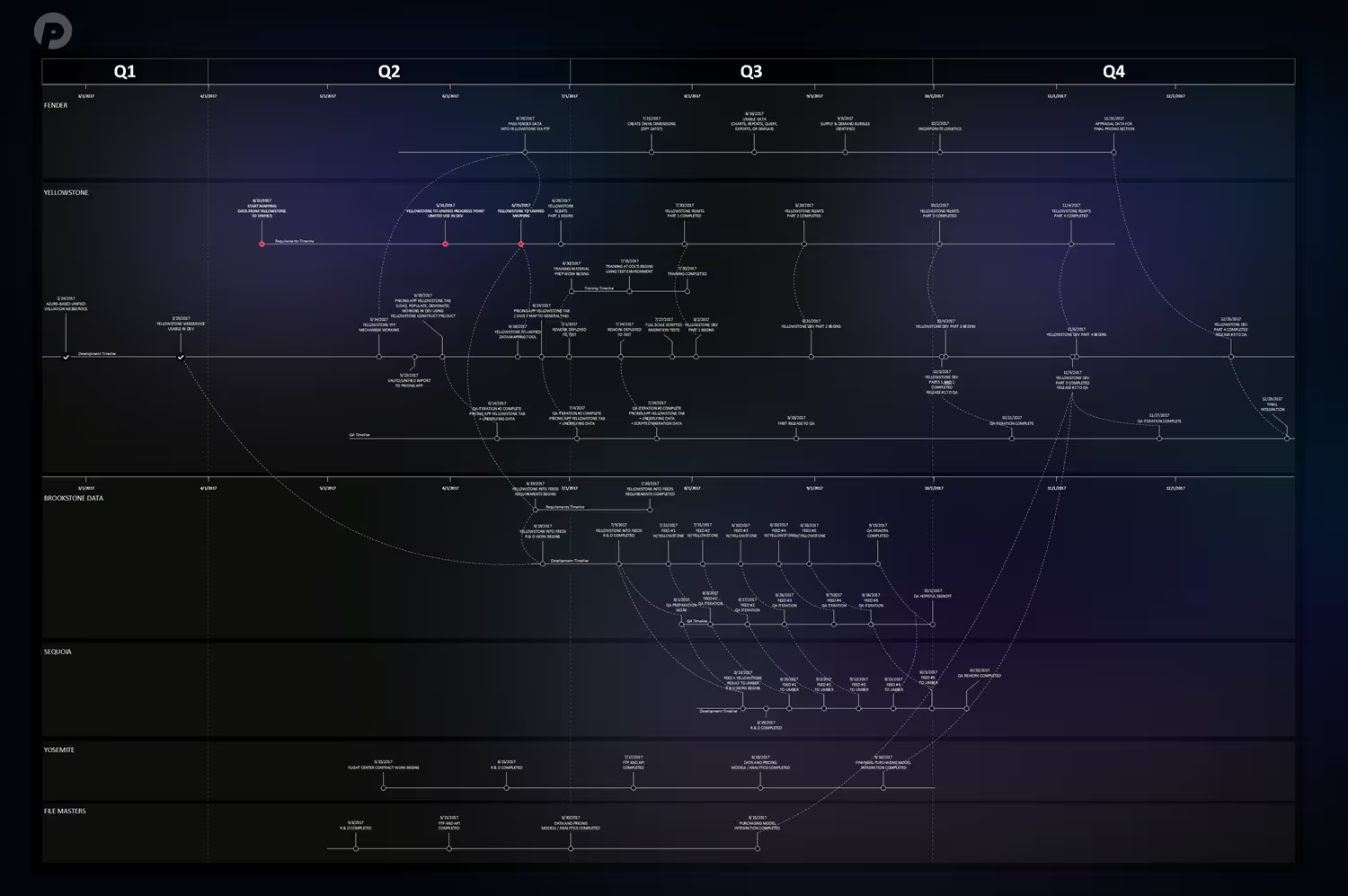
DevOps CI/CD Pipeline Implementation
Helped one of the fastest growing legal processing companies in the United States to automate its continuous integration / continuous deployment DevOps pipelines.
Fractional CAIO services by city
Senior technology leadership backed by real client engagements across these metros.
California
Florida
Missouri
Nevada
Frequently asked questions
What does a fractional Chief AI Officer actually do?
A fractional CAIO leads AI strategy and implementation without the full-time headcount cost. That means identifying where AI creates genuine business leverage, selecting the right models and vendors, building governance frameworks, and ensuring AI initiatives deliver measurable outcomes rather than proof-of-concept experiments.
How is a fractional CAIO different from hiring an AI consultant?
A consultant scopes a project and delivers findings. A fractional CAIO stays involved through execution — steering model selection, integration architecture, team capability development, and board-level reporting. The accountability is ongoing, not transactional.
Which AI initiatives are actually worth pursuing for most businesses?
Most organizations have a small set of high-leverage AI opportunities: document processing, customer service automation, internal knowledge retrieval, and workflow intelligence. The AI Opportunity Matrix is a structured process for identifying which initiatives are feasible, valuable, and appropriate for the organization's risk tolerance.
Do we need proprietary AI models or can we use existing foundation models?
Most enterprises do not need proprietary models. Existing foundation models combined with proprietary data through fine-tuning or retrieval-augmented generation typically deliver better ROI than building from scratch. Model selection depends on latency requirements, cost, data privacy, and compliance constraints.
Related Reading
What Is a Fractional CAIO?
The role, responsibilities, and when organizations need a Chief AI Officer on a fractional basis.
How to Build an AI Strategy
A structured framework for identifying AI priorities, managing risk, and measuring real business value.
AI Governance for Executives
What board-level AI governance actually requires — policies, oversight structures, and accountability frameworks.
Do You Need a Chief AI Officer?
A fit assessment for whether your organization has reached the point where a dedicated AI leader — fractional or full-time — would pay for itself.
Take the assessment →