Fractional CAIO in Brea, CA
AI strategy advisory for Brea and North Orange County companies — backed by platform architecture work for PRAM Insurance Services. That direct context on insurance and specialty pharma technology systems informs the AI strategy and adoption advisory I provide for these industries.

Platform rebuilt
Specialty pharma web application redesigned and rebuilt
Dual industry
Insurance + specialty pharma — direct architectural context in both
Systems context
Inside knowledge of the platforms where AI creates the most value
Platform architecture in insurance and specialty pharma — the PRAM engagement
This page is built on a real engagement: I led a specialty pharma web application redesign and rebuild for PRAM Insurance Services, a Brea-based company operating at the intersection of insurance and specialty drug services.
To be clear: this was platform and architecture work, not an AI engagement. I did not lead AI initiatives at PRAM.
What that work provides is direct, inside context on the systems and process logic of an insurance and specialty pharma technology platform — context that makes AI strategy advisory for those industries specific rather than generic. Insurance and specialty pharma are both industries where AI is creating significant operational change: claims automation, prior authorization processing, compliance checking, document intelligence. Having built and re-architected a platform in that space means the AI use-case analysis starts from the actual system, not from a market overview. I know where the data lives, what the business rules look like, and where the logical integration points are for AI capabilities.
The AI opportunity in insurance
Insurance is one of the most data-rich industries in the economy, and it has been applying statistical models to risk assessment for decades. The shift to modern AI is accelerating that work in every part of the business:
Claims processing. The traditional claims workflow is document-heavy and labor-intensive: a claim comes in, staff review supporting documentation, apply coverage rules, determine eligibility, and route for payment. AI transforms that workflow: LLMs extract structured data from claim documents, ML models apply coverage rules to claim characteristics, and automation routes routine claims straight to payment while escalating exceptions for human review. The efficiency gains — faster cycle times, lower processing cost, better fraud detection — are measurable and significant.
Prior authorization. Prior auth is a structured decision problem: does this drug or procedure meet the criteria for coverage under this policy? AI models that apply formulary rules and clinical guidelines to prior auth requests can automate the routine approvals and route the edge cases to clinical review. For a specialty drug environment where prior auth is required for high-cost medications, the speed and accuracy improvements are directly tied to patient outcomes.
Underwriting intelligence. Traditional actuarial models use a constrained set of risk signals. ML models trained on broader signals — claims history, demographic patterns, behavioral data, third-party risk scores — can improve pricing accuracy while identifying coverage opportunities in segments that traditional models underserve.
Document intelligence. Insurance generates an enormous volume of documents: policies, endorsements, claims, EOBs, medical records, legal filings. LLMs that can extract, classify, and reason over those documents at scale eliminate a category of labor that is currently among the largest cost items in insurance operations.
The AI opportunity in specialty pharma
Specialty pharmaceutical services add regulatory complexity to the document-intensive patterns of standard healthcare:
Prior authorization for specialty drugs. Specialty medications — biologics, specialty injectables, high-cost oncology drugs — almost universally require prior authorization. The clinical criteria are complex, the documentation requirements are extensive, and the approval timelines affect patient care. AI-assisted prior auth review can reduce approval time from days to hours for straightforward cases, with human clinical review concentrated on the genuinely complex cases.
Regulatory compliance automation. Specialty pharma operates under overlapping regulatory regimes — FDA, CMS, state pharmacy boards, specialty pharmacy accreditation standards. Compliance documentation is continuous and voluminous. AI systems that monitor clinical and operational documentation against regulatory requirements, flag gaps, and generate audit-ready reports reduce the compliance burden substantially.
Patient adherence and support program management. Specialty pharmaceutical programs typically include patient support services: adherence monitoring, side-effect management, financial assistance, care coordination. AI in these programs — identifying at-risk patients, automating routine check-ins, personalizing support interventions — improves outcomes and reduces program cost simultaneously.
The North Orange County landscape
Brea anchors North Orange County alongside Fullerton, Anaheim, and Yorba Linda — a substantial business community with its own distinct character:
- Healthcare, insurance, and specialty pharma — the North OC has a significant base of healthcare-adjacent businesses, insurance services companies, and specialty pharma operations serving the Southern California population.
- Professional services and consulting — a large base of professional-services firms whose document-intensive workflows are natural AI application environments.
- Distribution and light industrial — the North OC’s logistics and distribution infrastructure is beginning to look at AI for route optimization, demand forecasting, and warehouse automation.
- Financial services — a meaningful base of financial planning, insurance, and wealth management firms where AI in client communication, document processing, and compliance is an emerging priority.
What a Fractional CAIO delivers for a Brea firm
The highest-value deliverables for most Brea / North Orange County companies:
- Insurance and pharma AI roadmap — prioritized AI use cases for your specific business, with LLM and ML architecture recommendations, a human-in-the-loop design for regulated decisions, and ROI estimates.
- Claims and prior auth automation architecture — the end-to-end design for AI-driven claims processing or prior authorization, including extraction models, rule application logic, escalation design, and integration with existing claims systems.
- Document intelligence for regulated industries — LLM strategy for processing insurance policies, medical records, and pharmaceutical documentation with the accuracy and audit standards that regulated contexts require.
- AI governance for regulated industries — model approval process, data governance policy, compliance mapping (state insurance requirements, FDA/CMS), and audit documentation architecture.
- Fraud and anomaly detection — ML model design for identifying suspicious patterns in claims, prior auth, or patient data.
- AI readiness assessment — a systematic audit of your current platform, data, and governance posture relative to the AI capabilities you’re considering.
These are detailed on the main Fractional CAIO services page — substantiated here by platform architecture experience at the intersection of insurance and specialty pharma, two industries where AI adoption is not hypothetical.
How the engagement works
- Discovery (2–4 weeks): process mapping, data audit, regulatory context review, and AI use-case prioritization. Output: a written AI roadmap and governance framework.
- Architecture phase: claims automation design, prior auth AI architecture, document intelligence pipeline, or whichever priority use cases the discovery surfaces.
- Build and deployment: LLM integration, model training and validation, compliance testing, and production deployment with monitoring and audit logging.
- Ongoing: model accuracy tracking, compliance documentation updates, and roadmap expansion as your AI program matures.
If you’re a Brea or North Orange County company in insurance, specialty pharma, or any compliance-intensive business evaluating AI strategy — the next step is a discovery call.
Real work with PRAM Insurance Services, Insurance & specialty pharma technology leader in Brea
Every claim on this page comes from a real engagement, not a market summary.
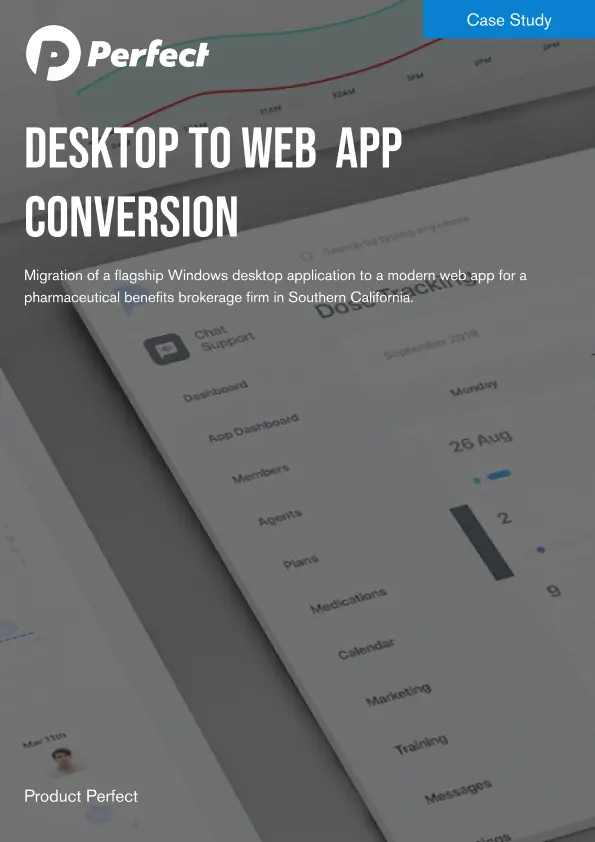
Migration of Desktop App to Web for Pharma
Migrated a flagship Windows desktop application to a modern web app for a pharma brokerage.
"Our industry of insurance is heavily regulated — Shawn Livermore understood that and delivered a powerful, secure, and compliant app."


Common questions about a fractional CAIO in Brea
What's the connection between the PRAM engagement and AI leadership?
What AI use cases are most relevant in insurance?
What AI use cases apply specifically to specialty pharma?
What's the difference between a Fractional CAIO and a Fractional CTO?
How does AI governance work in regulated industries like insurance and pharma?
How does an engagement start?
Other Fractional CAIO cities in North Orange County
Local engagement extends across the region. Browse fractional CAIO pages for nearby cities:
View all Fractional CAIO locations →Ready to bring a fractional CAIO into your Brea team?
Senior-level technology leadership with deep ties to North Orange County. Book a discovery call to see how a fractional engagement could fit.