A class-action settlement administration company I worked with had a specific problem: returned mail. Thousands of checks and documents come back from the United States Postal Service every cycle, and something has to process them, update the database, trigger the right follow-up, and log the result with near-perfect accuracy. Before the automated system, this was manual and slow. After it, the USPS returns processing ran at close to 100% accuracy with human review reserved only for genuine edge cases.
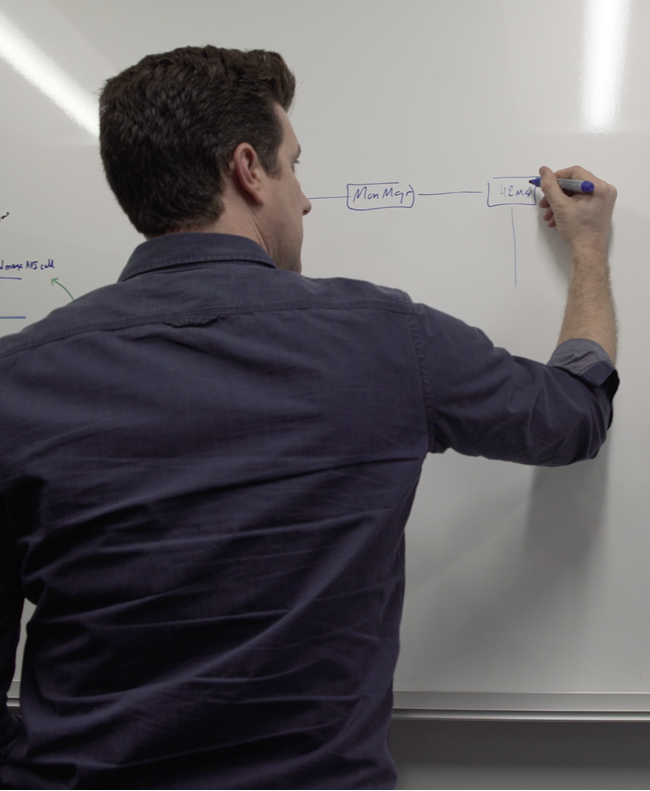
What made it work was not the technology. It was that we designed the architecture before writing a single line of code. The triggers, the rules, the USPS API integration points, the failure paths — all mapped upfront. Had we started building and filled in the workflow later, the way most AI projects actually run, we would have had a much slower and more expensive project with worse outcomes.
That engagement predates what anyone calls AI today. But the pattern it illustrates is the defining failure mode of AI deployments right now.
timeline
title AI Automation Maturity Path
Tool phase : Isolated capabilities
  : No data integration
Workflow phase : Connected processes
  : Triggers and data contracts defined
System phase : Governed automation
  : Owned, measured, failure-handled
The Tool-Versus-System Problem
When a company deploys a new AI tool, they are buying a capability — something that can classify, extract, summarize, or generate output. What they do not get, and what rarely exists at the start, is the workflow connecting that capability to real business operations.
A document AI can extract fields from a contract, but where does the extracted data go? What system receives it? What validation runs before it is written to the database? Who reviews anomalous results? What happens when the model is wrong?
These are workflow questions, not model questions. The model can be performing correctly while the business gets almost no value from it — because the architecture connecting the model to real decisions was never built.
The integration layer in most AI automations — data pipelines, API calls, validation logic, routing rules, exception handling — represents three to five times the engineering effort of the model work itself. Teams that treat this as an afterthought spend months retrofitting it, usually at a higher cost than it would have taken to design it upfront.
Why Architecture Has to Come First
Deferring workflow design produces a specific failure pattern: the architecture gets shaped by whatever is already built rather than by what the automation actually needs to do.
At the settlement administration company, the returns processing workflow had strict rules — what constituted a valid returned item, what triggered a database update versus a manual exception, how the USPS API handshake was structured. Had we started building without mapping those rules, developers would have built to their best guesses. When the actual rules surfaced, the rework would have been substantial.
The same pattern plays out in AI deployments. A team builds a document classification system. Three months in, someone realizes classified documents need to flow into three different downstream systems depending on document type, with different data formats for each. The model is fine. The workflow was never designed. Rebuilding the integration takes longer than the original model work did.
The lesson from the returns processing project was not that automated mail workflows are complex — they are. The lesson was that architectural planning determines how much complexity costs. Map the architecture first and complexity is manageable. Skip it and complexity compounds until the initiative is abandoned.
What a Governed AI Automation Looks Like
A clear AI strategy, proliferated across departments, turns agentic automation into durable efficiency instead of scattered experiments. In practice, that means every automated workflow has four things defined before it touches production:
A trigger. What event starts the process? A new document, a form submission, a schedule, an API call? Ambiguous triggers produce unpredictable execution.
A data contract. What data enters the model, in what format, from what source? The model is not the validation layer. The architecture is. Data that changes shape at the source breaks everything downstream.
An owner. Who is accountable for the output — not who built it, but who is responsible for its accuracy in production and who has authority to halt it when something goes wrong? Most AI tools get deployed with no clear owner. The model runs; nobody is watching.
An exit condition. What does the automation do with a result it cannot confidently handle? Human review queue? Flagged for batch audit? Silent failure is the most common outcome when this is not designed, and it is the most expensive one to discover later.
The Organizational Layer
Workflow architecture is partly a technical problem and partly an organizational one. The technical side — triggers, data contracts, integrations, failure modes — is solvable with good engineering. The organizational side is harder.
Most AI deployments involve a tool purchased by one team, used with the expectation that other teams will act on the output, with no agreed protocol for what happens when the output is wrong. That gap is where automation dies. The model keeps running. The business stops trusting it. Eventually someone shuts it off.
The companies that build AI automations that last resolve the organizational questions before writing code: who owns the initiative, what success looks like in the first 60 days, and what triggers a stop. These are leadership decisions. They are also the difference between a pilot and a production system.
The returns processing project at the settlement administration company worked because the architecture — technical and organizational — was settled before development began. That precedence is not a methodology preference. It is the practical reason the system ran at near-100% accuracy instead of accumulating manual exceptions that never got cleared.